Sleep does not equal Sacrifice
In ambitious school environments, sleep is often treated as the easiest thing to cut. When pressure rises, students are praised for pushing through, staying up later, and sacrificing rest in the name of performance. The problem is that this logic is backward.
In this piece, Christopher Green offers an evidence-informed perspective on why sleep is not the opposite of academic ambition, but one of the conditions that makes sustained performance possible.
Key ideas:
- Sleep is part of learning, not time stolen from it.
- Tired students often work longer while retaining less.
- Adolescent biology is frequently misaligned with school structures.
- Visible exhaustion is too often mistaken for commitment.
- Strong performance depends on recovery as much as effort.
The assumption that more waking hours automatically lead to better outcomes is deeply embedded in school culture. A student falls behind, exams approach, deadlines gather, and the instinct is almost always the same: do more, stay up later, keep going. It sounds disciplined. It often looks impressive. But academically and biologically, it is frequently self-defeating.
Sleep is where learning is secured
Sleep is not passive downtime. It is one of the core processes through which learning is stabilised. Memory consolidation, emotional regulation, attention, processing speed, and judgment are all affected by it. Students may spend hours revising, annotating, practising questions, or rereading notes, but if sleep is compromised, much of that effort becomes less efficient. The brain does not simply need information input; it also needs the conditions to organise and retain what it has taken in.
Exhaustion can look like effort
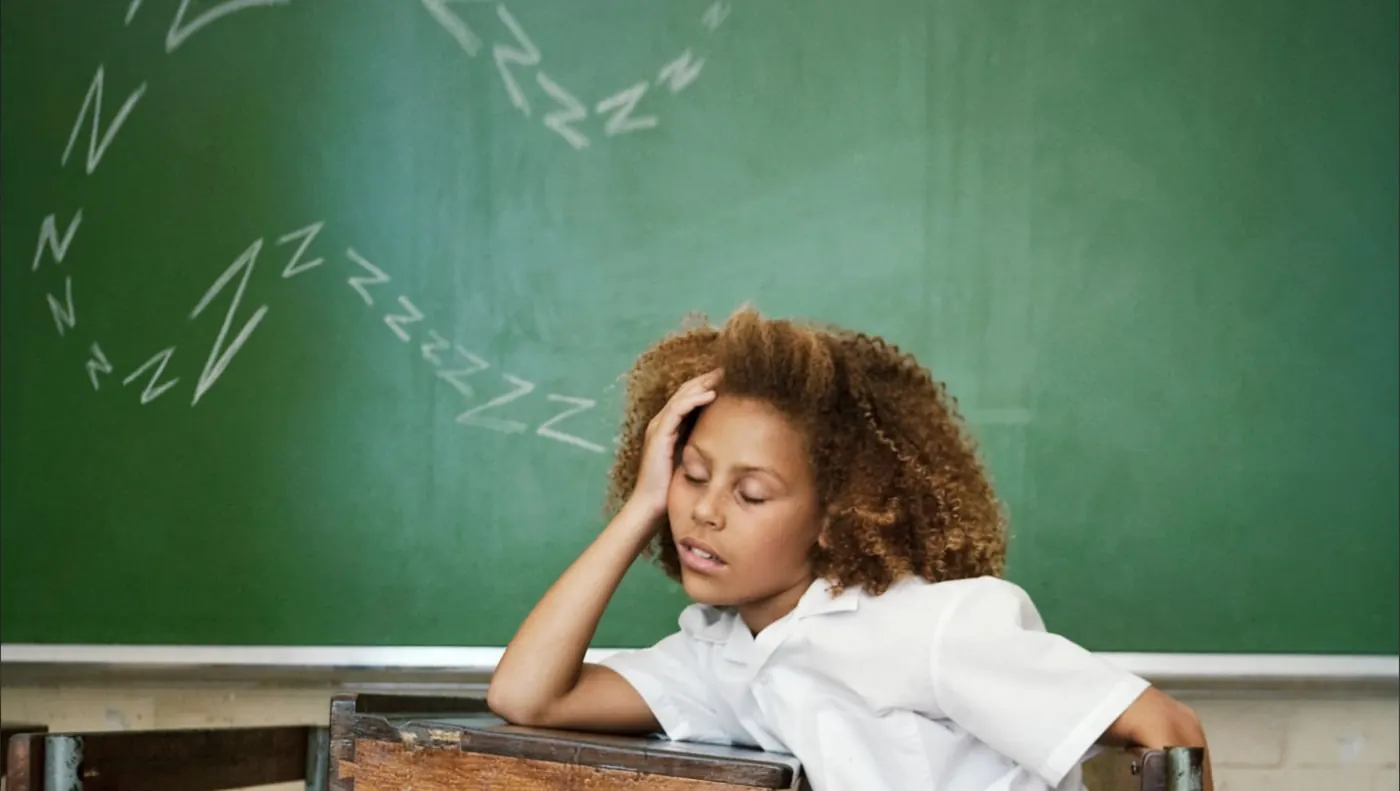
One of the reasons this issue is so easy to miss is that tired students often still appear hardworking. They are sitting at the desk. They are putting in the hours. They are visibly trying. From the outside, that reads as commitment. But cognitive fatigue narrows attention, weakens working memory, slows retrieval, and increases careless mistakes. In other words, a student may be investing more time while learning less. That is not a lack of character. It is a problem of diminished cognitive efficiency.
Teenagers are not just smaller (or sometimes bigger) adults
Adolescence comes with a natural shift in sleep rhythm. Many teenagers are biologically inclined to fall asleep later and wake later, yet school systems often continue to demand early starts, sustained concentration, and heavy evening workloads. Add devices, extracurricular expectations, and the social pressure to appear relentlessly productive, and students begin to treat sleep as negotiable. It is not simply a matter of poor discipline. Often, it is a structural mismatch between biology and expectation.
School culture can reward the wrong thing
In many high-performing environments, visible strain is quietly rewarded. Students compare revision hours, normalise late nights, and begin to associate exhaustion with seriousness. Families sometimes do the same, reading tiredness as proof that a child is trying hard enough. But schools that genuinely care about outcomes should be much more interested in cognitive quality than performative struggle. A calm, rested student is not necessarily disengaged. Very often, they are simply better placed to think clearly and perform consistently.
Better recovery often improves performance faster than more pressure
In advisory work, this is a pattern that returns again and again. A family worries about focus, motivation, grades, or momentum, and the first response is often to add pressure, tighten structure, or increase support. Sometimes that is right. But sometimes the more effective intervention is simpler: stabilise sleep, reduce late-night academic spillover, and rebuild the student’s capacity to think. When that happens, the improvement can look like a motivational breakthrough, when in reality the student’s brain is simply functioning more effectively.
Sustainable ambition requires rhythm, not depletion
Sleep is not the enemy of ambition. It is one of the conditions that makes ambition sustainable. Students do not build strong futures by repeatedly borrowing against their own cognitive health. They build them through routines that support clear thinking over time. For families, this means looking beyond visible effort alone. For schools, it means asking whether their systems support learning or simply reward endurance. The students who perform best are not always the ones doing the most. Very often, they are the ones whose minds have had the chance to recover.
Sleep is not a sacrifice that serious students should be expected to make.
It is one of the foundations that allows serious learning to happen.
Selected bibliography
- American Academy of Pediatrics. “School Start Times for Adolescents.”
- Carskadon, Mary A. Research on adolescent sleep and circadian timing.
- Foster, Russell. Work on circadian neuroscience and sleep.
- Harvard Medical School, Division of Sleep Medicine. Resources on sleep, learning, and adolescent health.
- Panda, Satchin. Research on circadian rhythms and biological timing.
- Walker, Matthew. Why We Sleep.